Super Mario Bros NES
About Super Mario Bros
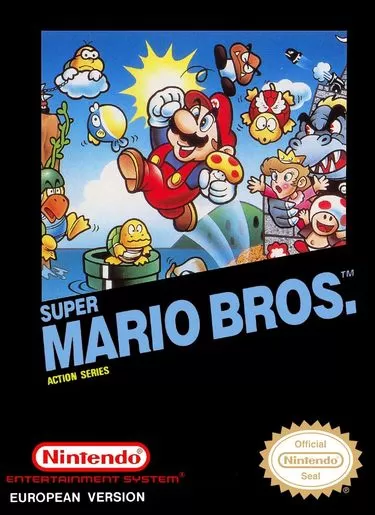
Super Mario Bros., released in 1985, is the game most directly credited with rescuing the North American console market after the 1983 crash — Nintendo bundled it with the NES itself, and its clean, immediately readable level design (a stark contrast to the murkier, harder-to-parse games that had flooded the market before the crash) is a big part of why the pitch worked.
Shigeru Miyamoto and Takashi Tezuka built all 32 levels around a small, tightly reused set of elements — Goombas, Koopa Troopas, pipes, question blocks, Bowser’s castles — arranged so that nearly every screen teaches the player something new about how those elements interact before asking them to apply it under pressure. That “safe teach, then test” rhythm became the template most 2D platformers since have measured themselves against, directly or not.
It’s also worth noting how small the moveset actually is: run, jump, and (with a Fire Flower) throw fireballs. Everything else — momentum-based jump arcs, the difference between stomping and touching an enemy, secret warp pipes — comes from how those two or three verbs interact with the level geometry, not from an expanding list of abilities.